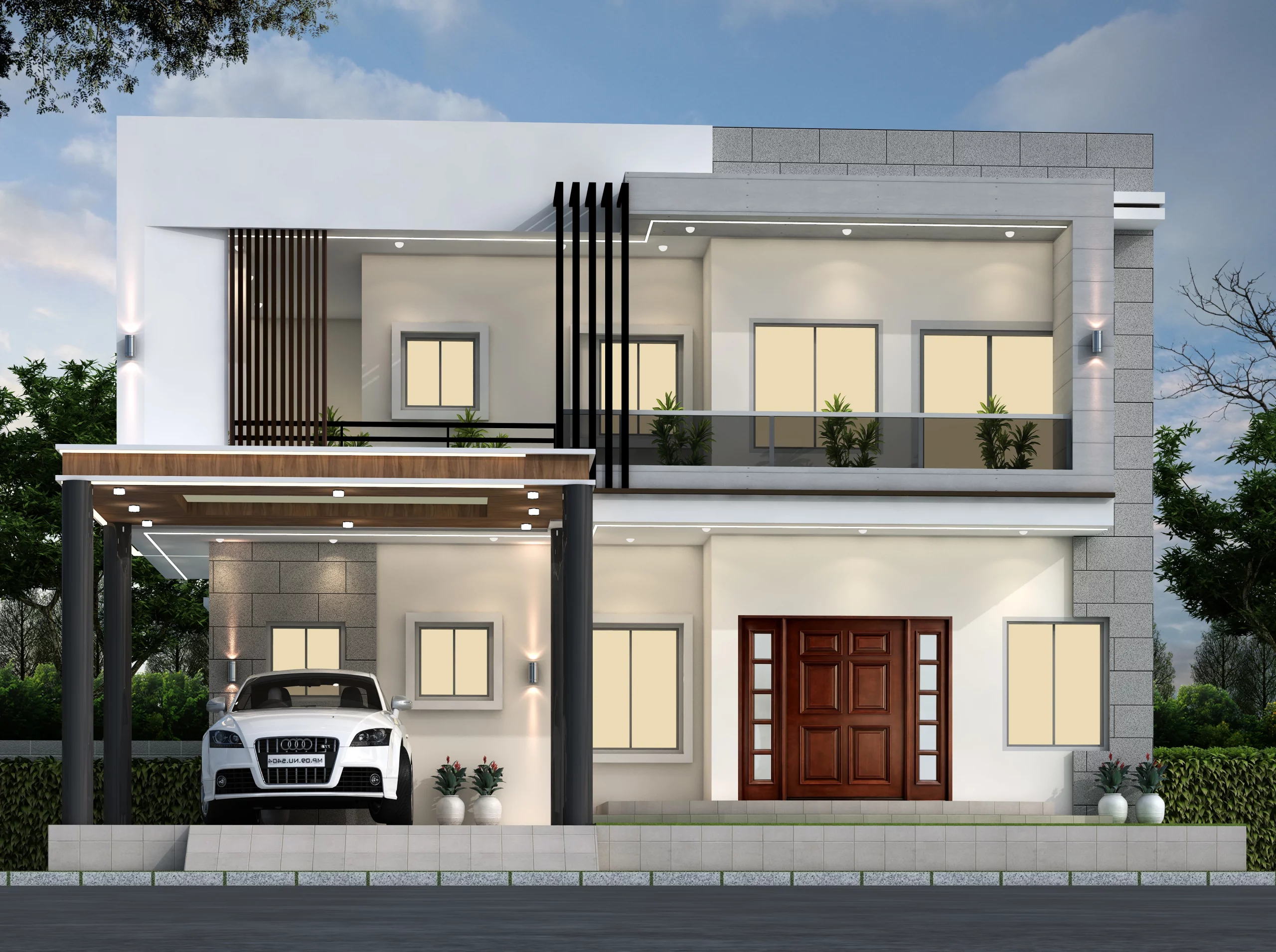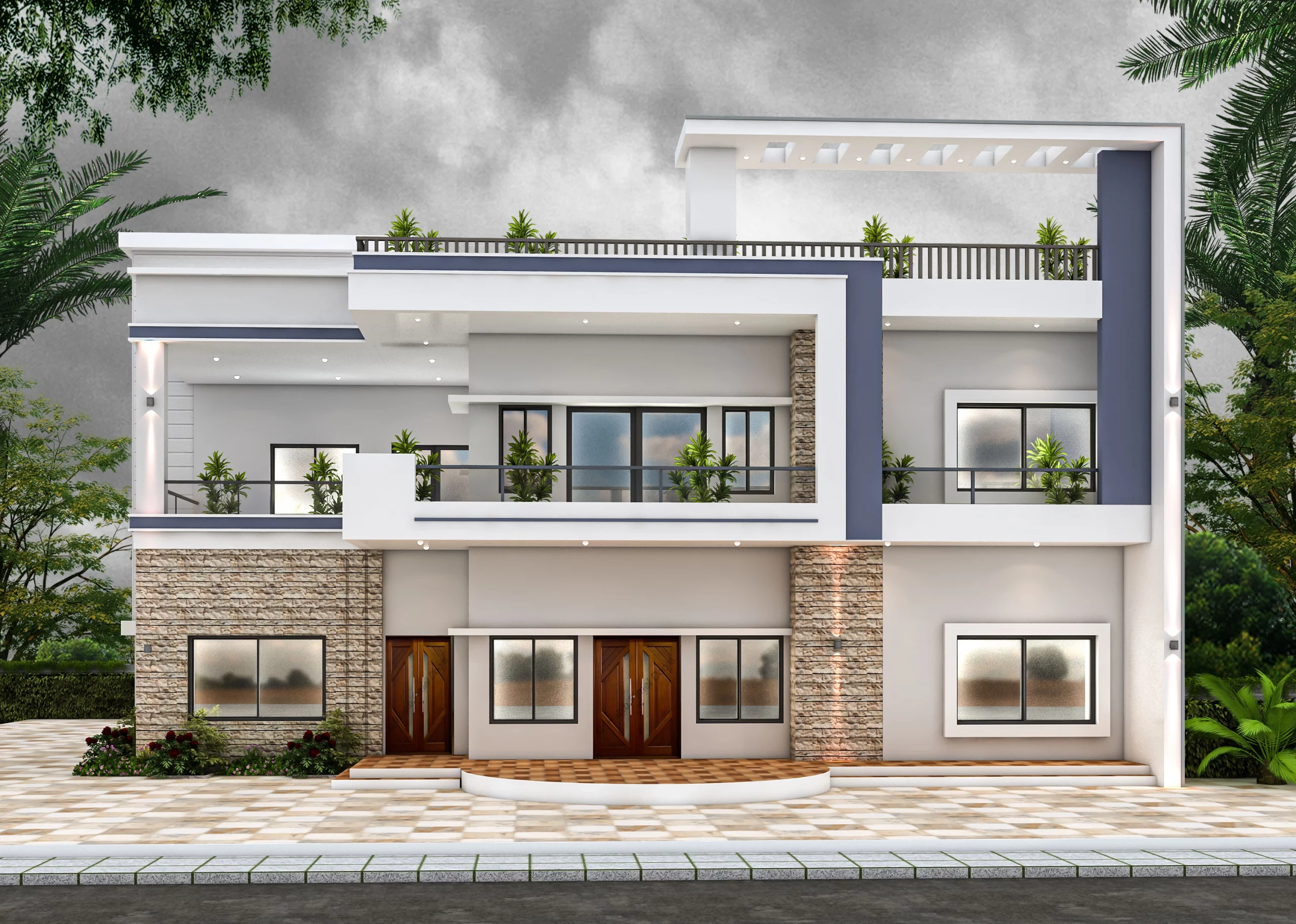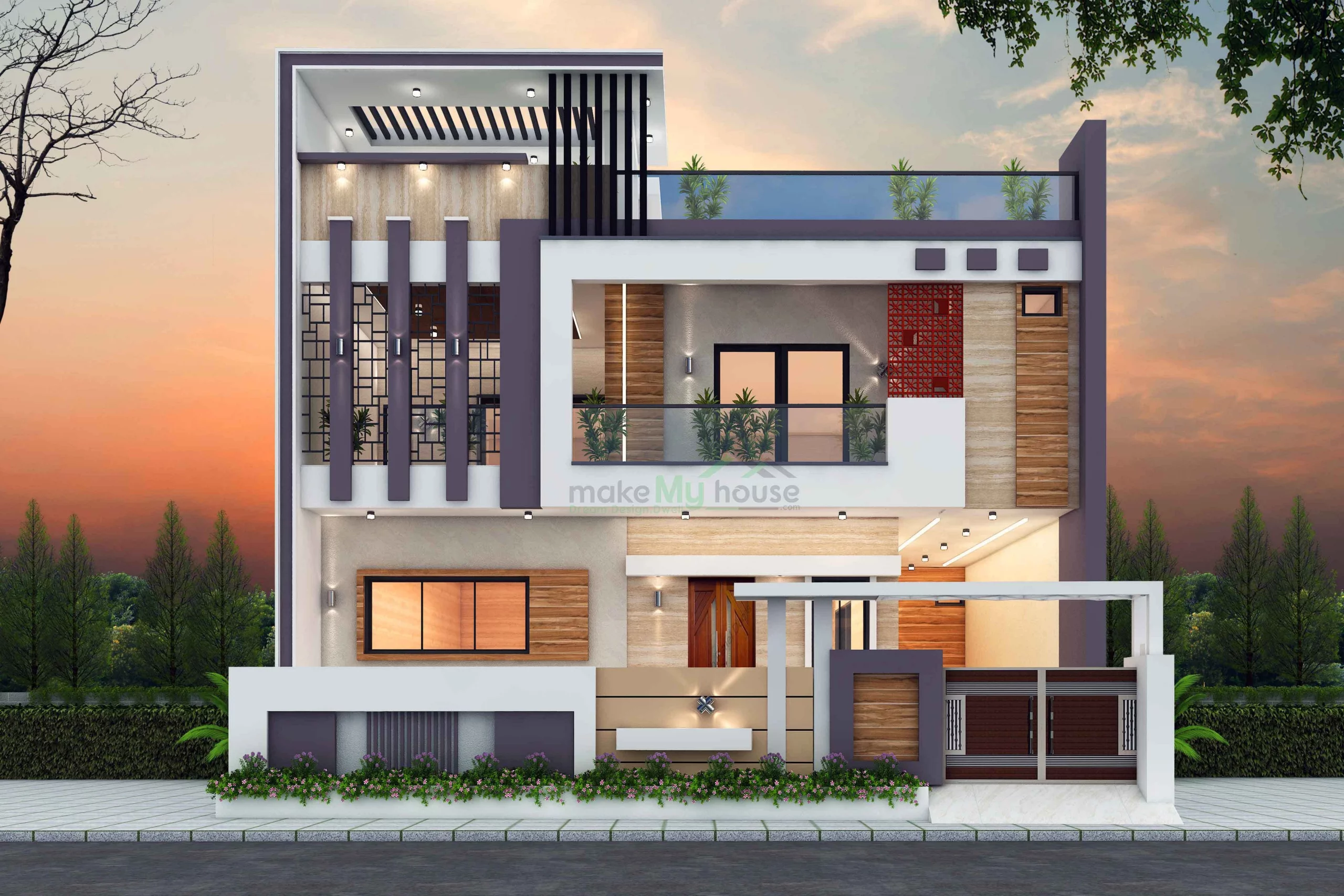
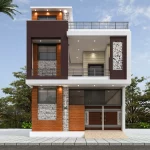
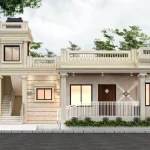

Choosing the perfect exterior color for your house elevation is important because it defines the first impression of your home. By considering factors like elevation style, sunlight, textures, and surrounding houses, you can create a balanced and attractive color combination. The right exterior colors not only highlight the design of your home but also make it look elegant and visually appealing.
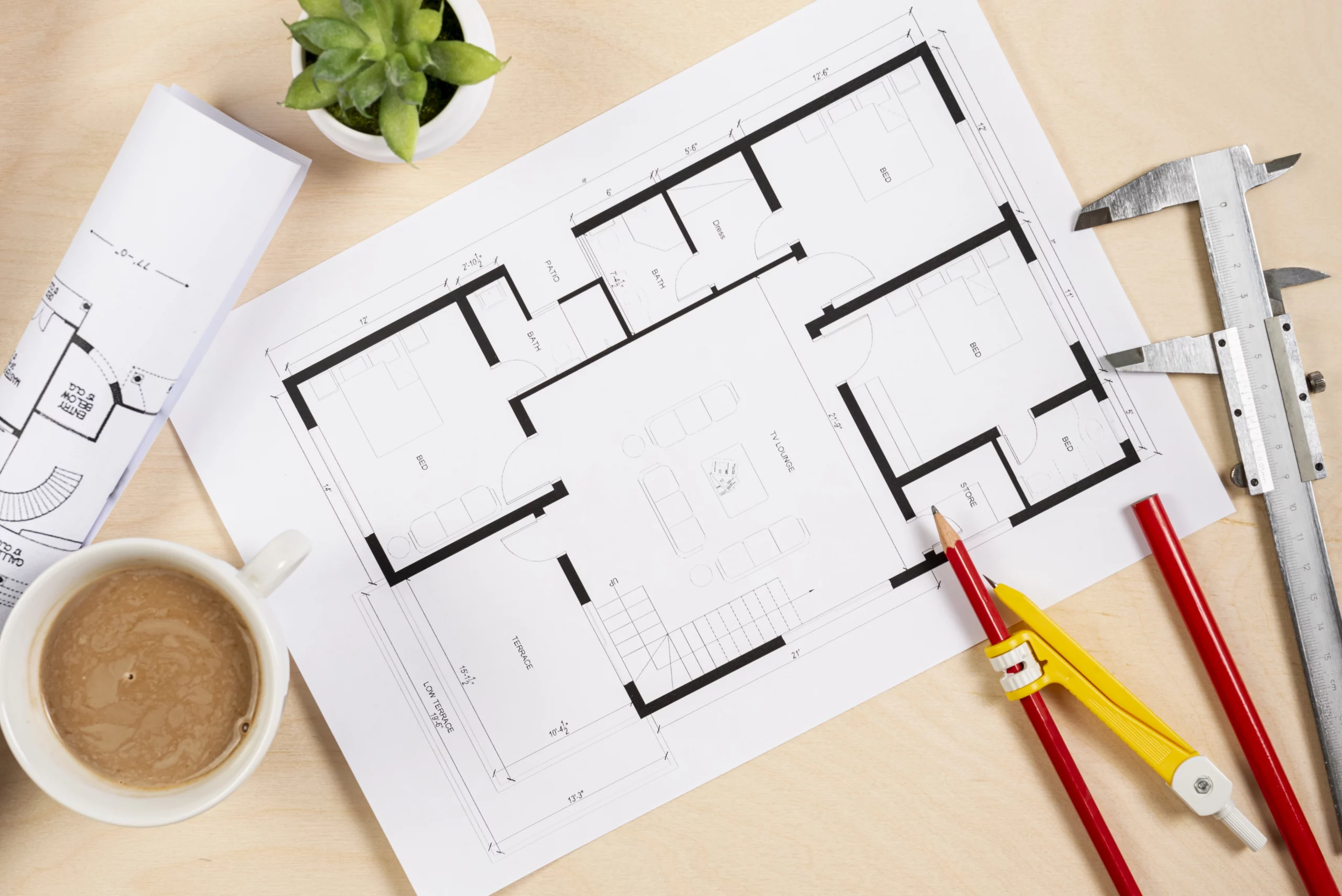
You finalize your house design.
The floor plan looks perfect.
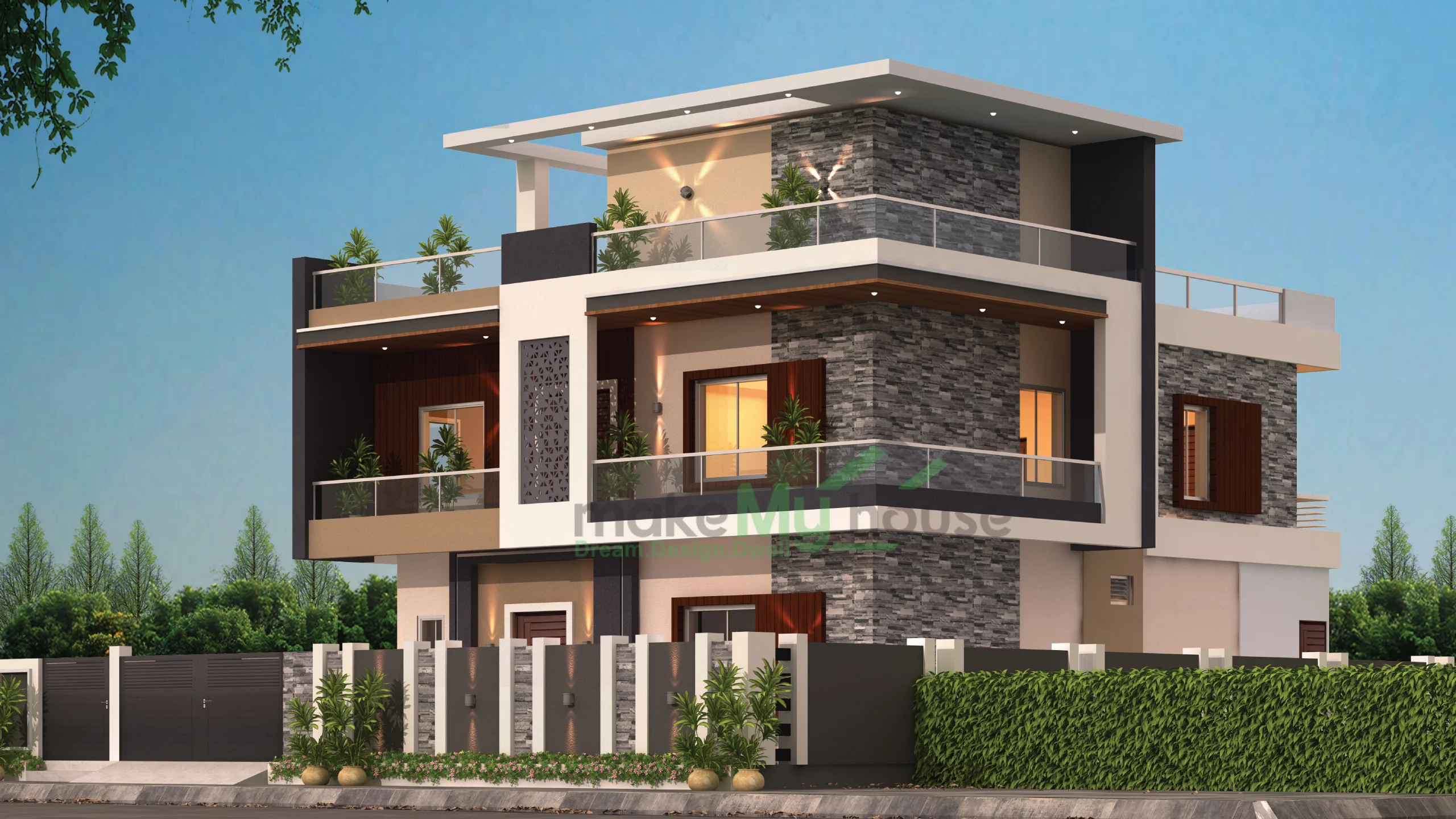
The elevation drawing also looks beautiful in the 3D design.
Then comes one small decision that many people underestimate — choosing the exterior color.
This is where many homeowners get confused.
Some people simply pick a color they like.
Some copy the neighbour’s house color.
Some let the painter decide.
Later, when the house is painted, something feels off.
The elevation design looks different from what you imagined.
The color feels too bright, too dull, or mismatched with the design.
I have seen this happen in many real projects. A well-designed house elevation can lose its charm just because of poor color selection.
That’s why understanding How to Choose the Perfect Exterior Color for Your House Elevation is very important.
The right color palette can make even a simple house look elegant and premium.
Let’s understand how architects usually approach this decision.

What Does Exterior Color Mean in House Elevation?
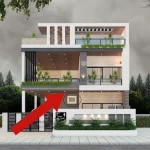
Your house elevation is the front face of your home. This is the first thing people notice.
Even before someone steps inside your home, they see:
- wall colors
- balcony design
- windows and frames
- Textures like stone or wood
- Gate and railing colors
The exterior color ties all these elements together.
If the color selection is right, the house looks balanced and attractive.
If the colors clash, even a good elevation design may look messy.
That is why architects treat color selection as an important part of elevation design.
Step-by-Step: How to Choose the Perfect Exterior Color for Your House Elevation
Choosing the right color is not just about liking a shade.
A few practical factors make the decision easier.
1. Understand Your House Elevation Style
The first step is to understand the style of your house elevation.
Different elevation styles suit different color palettes.
Modern House Elevation
Modern homes usually look best with minimal colors.
- Common choices include:
- White
- light gray
- charcoal
- Beige
- wooden textures
These shades keep the design clean and elegant. Traditional House Elevation
Traditional houses usually work well with warmer shades such as:
- cream
- sand colors
- light brown
- Terracotta
These colors create a classic and welcoming look.
Contemporary Elevation
Contemporary homes often use contrast combinations like:
- White and dark gray
- Beige and brown
- Off-white with stone cladding
Most architects prefer using two or three colors only.
Too many colors can make the elevation look busy.
2. Consider Sunlight and Plot Direction
Sunlight changes how colors appear on walls.
This is something many homeowners ignore.
For example:
- South-facing houses receive strong sunlight
- Dark colors may appear darker
- Very light colors may look too bright
- North-facing houses receive softer light, so colors may appear slightly muted.
In one project I observed, a client selected a dark gray color for the front elevation. When applied to the wall, it looked much darker than expected because the house faced strong afternoon sunlight.
That’s why architects often suggest testing paint samples on the wall first.
3. Observe the Neighborhood
Exterior color does not exist in isolation.
Your house is part of a street or neighbourhood.
If every house around you has neutral colors and you choose an extremely bright shade, the house may look out of place.
This does not mean you should copy others.
But it helps to understand the surroundings.
A good rule is simple:
Your house should stand out in a tasteful way, not in an awkward way.
4. Follow the Three-Color Rule
One common mistake homeowners make is using too many colors.
Sometimes you see houses with five different shades on the front wall. The result is visual clutter.
Architects usually follow the three-color rule:
- Primary color: Main walls
- Secondary color: Balcony or frame areas
- Accent color: Feature wall or design elements
Example combination:
Off-white (main wall)
- Gray (frames and borders)
- Wooden texture (accent panel)
- This approach keeps the elevation balanced.
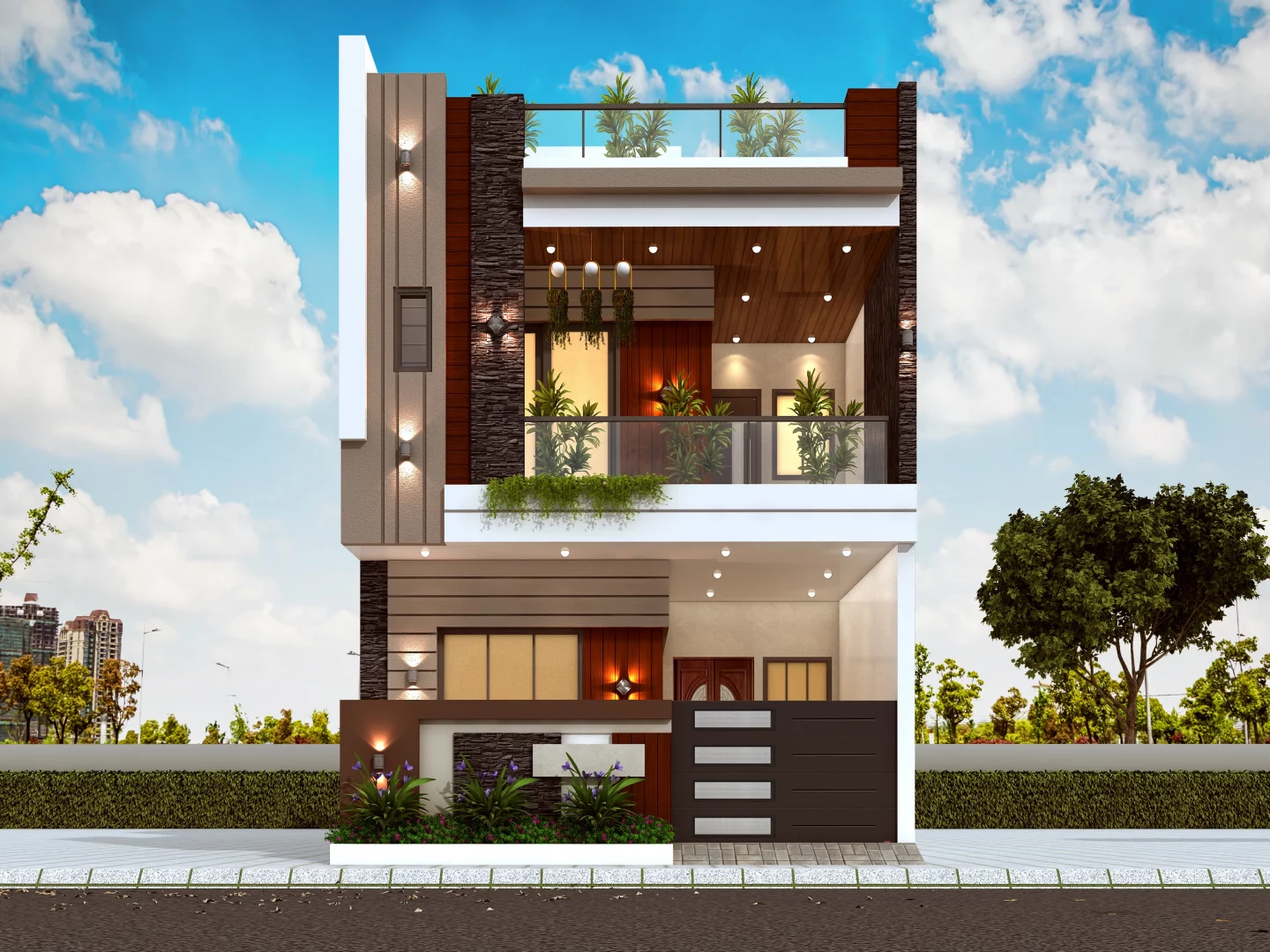
5. Match Colors with Textures
Modern house elevations rarely use only plain paint.
They often include materials like:
- stone cladding
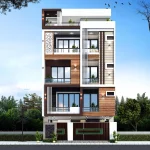
- wooden panels
- tiles
- hpl sheets
When selecting exterior colors, you must consider these textures.
For example:
- Wood texture pairs well with:
- White
- Beige
- light gray
- Stone cladding works nicely with:
- off-white
- sand shades
- dark gray accents
Ignoring texture while choosing paint color can make the design look mismatched.
6. Think About Windows, Railings, and Gate Color
Exterior color planning should also include other elements such as:
- Window frames
- balcony railings
- main gate
- Pergola or shading structures
These elements contribute to the overall look.
A very popular combination in modern houses is:
Light walls with black window frames.
This creates a clean and modern appearance.
7. Think Long-Term Maintenance
Exterior paint is not something you change every year.
A practical question to ask is:
“How will this color look after five years?”
Very light shades may show dust quickly in areas with pollution.
Very dark colors may fade faster under strong sunlight.
That is why many architects recommend neutral shades such as:
- light gray
- Beige
- off-white
These colors age better and require less frequent repainting.
Real Experience Tip from Residential Projects
During several house design discussions, I noticed something interesting.
Many clients initially select bright colors from the paint catalog.
But when they see the same shade applied to a full wall in a 3D elevation or sample panel, they change their mind.
Why?
Because colors appear different on large surfaces.
A shade that looks subtle on a small paint card can feel overpowering when applied to the entire house.
That is why testing a sample patch on the wall is always a smart step.
Common Mistakes to Avoid When Choosing Exterior Colors
Making changes after painting the entire house can be expensive.
So it is better to avoid these common mistakes.
Using Too Many Colors
More than three colors usually create a cluttered look.
Copying Online Designs Blindly
A color combination that looks great on Pinterest may not suit your house elevation.
Ignoring Natural Light
Sunlight can change how colors appear throughout the day.
Paint should complement stone, wood, or tile textures.
Ignoring Maintenance
Some shades collect dust or fade quickly.
Popular Exterior Color Combinations for House Elevation
Some combinations are widely used because they work well with many designs.
White + Gray + Wood Texture
Clean and modern look.
Beige + Brown + Cream
Warm and classic appearance.
Light Gray + Charcoal
Great for contemporary homes.
Off-White + Stone Texture
Creates a premium feel.
FAQs
1. What is the best exterior color for house elevation?
Neutral shades like white, beige, grey, and off-white are widely preferred because they suit most elevation styles.
2. How many colors should be used for house exterior?
Most architects recommend using two or three colors for a balanced design.
3. Can dark colors be used in house elevation?
Yes, dark shades can be used as accent colors or feature walls.
4. Why should I test exterior paint samples?
Paint samples help you see how the color looks under natural sunlight before finalizing it.
5. Which colors are popular for modern house elevations?
White, grey, charcoal, and wood texture combinations are very popular in modern designs.
6. How long does exterior paint last?
Good quality exterior paint usually lasts between 5 and 8 years depending on weather conditions.
7. Does exterior color affect property value?
Yes. A well-chosen color combination can make a house look more attractive and appealing to buyers.
8. Should I consult an architect for exterior color selection?
If your elevation design includes multiple textures and elements, an architect’s advice can help maintain balance.
Conclusion
Your house elevation is like the face of your home. People notice the colors before they notice anything else. Choosing the right palette is not just about personal preference. It involves understanding the design style, sunlight, textures, and surroundings.
When you understand How to Choose the Perfect Exterior Color for Your House Elevation, the entire look of the house changes. A simple home can appear elegant. A well-designed elevation can stand out beautifully. Take time to test colors, study the design, and think about the long-term look. Because once the right color combination comes together, the house truly feels complete.